Echoes––Part Two

The conclusion to Jack and Holly’s adventures reads below. Their expedition is based on factual events. Following the story is a list of what really happened.

IMG_2079
The boats of Coos Bay, Oregon

Echoes––The Conclusion

“Look Holly,” Jack commanded, “I found a family name here, my family, I mean.”

Holly looked up from the book she was searching through at a table in the Coos Library. She thought it strange he was reading in the first place when he had been quite vocal that he would rather be in the pub three doors down. The librarian hushed Jack with a classic look; glasses lowered to the tip of the nose, eyes focused and glaring over the rim at the perpetrator.

“It says here she married John and Eliza’s son, George,” Jack whispered, “Oh, wait, I take it back, George’s wife’s name is the same as my great-grandmother’s, but I don’t recognize her father’s name.  It can’t be my family.”

Holly breathed a sigh of relief and added, “That would be strange to think I’m a blood relative to you.” She shuddered.

“That would make things even more weird.” Jack said.

Holly didn’t miss the inflection in Jack’s voice. She wondered what he had meant by “even more weird.” Holly pondered on their relationship and wondered if the remark was about their marriage –– she had a hunch and hoped this was about how they had heard from relatives that their ancestors had been at odds.  But things have been weird between us these last few months and I can’t put my finger on it.

She tucked the remark away and continued her study of the local newspaper, Coos Bay Echoes. “Death Summons Prominent Citizen,” the headline read, and Holly was surprised to read in great detailof the life of John Yoakam. She thought how glad she was that reporters and editors included more personal details than they do today.

“It says here the girls are buried at Yoakam Hill,” Holly said, “Didn’t we see that on a map?” She glanced over her shoulder, expecting a scolding from the librarian.

“Let’s go,” Jack said, “Let’s go find this hill.”

“I want to see Eliza’s spinning wheel in the Coos Historical and Maritime Museum and visit the cemetery all the Yoakams are buried in.”

“Macabre.” Jack observed.

Holly started to defend herself, thought better of it and gathered her things in silence.

        * * *

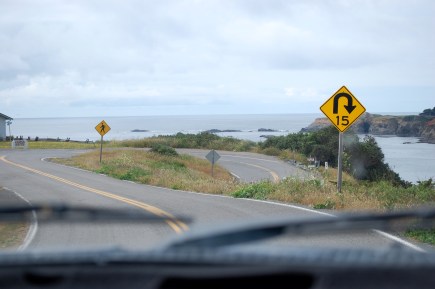
The eastern sun streaked into the cab as Jack nosed the truck up the narrow, gravel road.  The area was heavily forested, isolated and devoid of human inhabitants.

“Are you sure the map said to head west on Cammon Wagon Road?” he asked without taking his eyes off the road.

“Positive, just keep climbing, we’re almost there.”

They reached the summit to find the road had ended, but a short driveway led to a home surrounded by a cyclone fence. They exited the truck and headed toward the house to ask permission to walk the property, but no one appeared to be home. They trounced around the forested property outside the fence looking for headstones. Jack was enjoying the exploration, but after an hour Holly grew frustrated, trudging in the dirt, brushing limbs, leaves and debris aside looking for markers.  She hoped that the house had not been built over the little cemetery.

“Look, Jack,” she said pointing at the map, “The GPS coordinates say I am standing on the exact burial site, but there is nothing here,” Holly’s eyes welled, “It’s gotto be here, all the books, websites, and maps say this is the place,” Holly said with a disappointed and loud sigh, “I guess it’s time to give up.”

The couple plodded with a defeated posture back to the truck, climbed in, and Holly slammed the door in frustration. As Jack turned the truck around to head down Yoakam Hill, a black sedan crawled around a corner, tires crunching on the gravel and approached. The driver pulled alongside the truck and questioned Jack. He explained the reason for their presence and the homeowner, congenial and polite, told them she had lived there for over forty years and had never heard of the burial site. Holly handed her a business card and asked to please call if she ever learned any information.

Before Jack could engage the motor, Holly placed her hand on Jack’s right forearm.

“Wait, Jack, I want to ask you something.”

She asked what he had meant by things being even more weird.  He explained that he didn’t mean anything at all, there was no hidden meaning.


“I was referring to the weirdness that you had discovered our people fought against each other in the famous Battle of Culloden in 1746.”

“Oh,” Holly said with relief.

“Is that why you’ve been so quiet today?” Jack inquired as she relaxed back in her seat.

Holly sat still and shrugged her shoulders replying, “I guess so. Let’s head out of The Coos Pioneer Cemetery. I know we’ll find that.”

                                                                                      * * *

Jack positioned the rig onto the street in front of their house.

“We’re home. Another successful voyage across mountain and valley.” Jack declared.

Holly was annoyed at Jack’s habit of stating the obvious. Jack, thinking she was going to playfully call him Mr. Obvious, noticed her seriousness.

“What’s wrong Holly?” he asked, “Are you disappointed?”

“I really wanted to find those five gravesites, so yes, I am a little. Besides, I don’t think you enjoyed this trip much.”

“Listen,” Jacked turned and cupped her face in his hands, “I had a really great time. Do you remember me telling you that my great-great-grandfather was the trail guide for Brigham Young on the way to Utah?”

Holly nodded.

“The rumor is he converted to Mormonism after. I bet there are lots of records about him.”

“I thought this genealogy stuff bored you.”

“You were so excited, and in your element, it was inspiring.  Seeing my grandmother’s name got me rethinking. And I really loved traipsing through the woods on Yoakam Hill. I felt like an old-time wilderness explorer––we were Lewis and Clark.”

Holly smiled at the comparison.

“I know a great Italian place in Salt Lake City.”

Facts and Actual Events

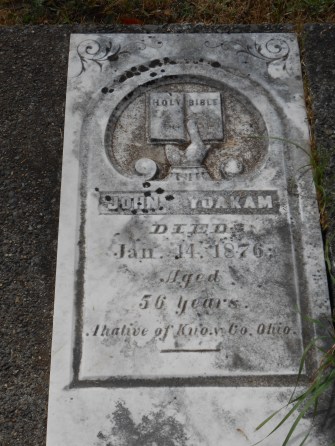
  • Eliza and John Yoakam lost five daughters by a burning, falling tree, one a babe in Eliza’s arms.
  • The tragic loss of the Yoakam girls is documented in newspapers such as the Coos Bay Echo, as well as the “Death Summons Prominent Citizen” article, found in the Coos Bay Library.
  • The oldest girl that perished was adopted by John and Eliza after the girl’s mother passed away. It has been said that she was Eliza’s best friend’s daughter.
  • Eliza and John lost their oldest son to disease on the trail.
  • Eliza delivered the baby girl that died in her arms three days after arriving in the Coos Bay area.
  • According to a graveyard and burials website, and in Coos Bay history books, the girls are buried together at Yoakam Hill
  • Jack and Holly (aka ‘Frank’ and Janet) could not find the tiny graveyard.
  • The resident on the hill had never seen or heard of the graves in all the 40+ years living on Yoakam Hill.
  • Eliza Yoakam’s spinning wheel is on display at the Coos Historical and Maritime Museum.
  • Jack and Holly camped in an RV on Arago Beach beneath the cliffs of the Yoakam State Park.
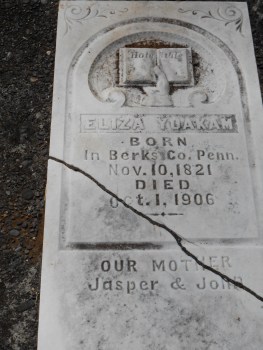
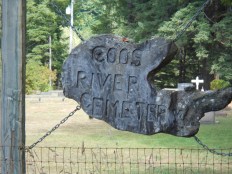
  • Jack and Holly found Eliza and John’s grave markers at the Coos Pioneer Cemetery.
  • Jack, a Scotsman, and Holly, of English descent fought each other in some war in the ancient days: it may or may not have been Culloden.
  • Jack’s great-great grandfather was a trail guide for someone associated with Brigham Young, and was looking to settle in Utah.
  • Little Italy, in Coos Bay, is a fantastic place for dine.
  • Holly was often annoyed with Jack stating the obvious and called him Mr. Obvious.
  • Holly has never driven with an RV in tow, nor does she ever want to.
  • Jack would have rather been in the pub than the library but developed an interest in genealogy while in the Coos Library.
DSCN0043


DSCN0021_2


fullsizeoutput_3fed

DSCN0029
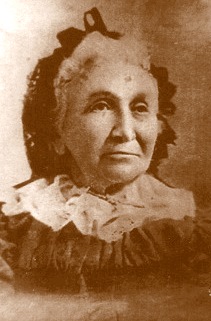
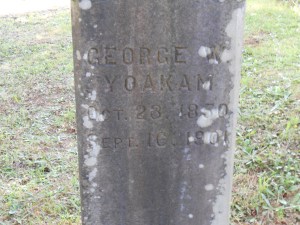
John was a younger brother of Jasper and George. George died in 1901, five years before his mother, Eliza,  as pictured above.


Echoes, Part 1

farm against sky
Photo by Sebastian Voortman on Pexels.com


I’m posting, in two parts, a short story written as a classroom assignment. This is based on true events that occurred in the ancestral line of my paternal grandmother, my great-great grandparents, John and Eliza Yoakam, who settled in Coos Bay, Oregon in the mid 1850s.


Echoes, Part One


“Turn left here,” Jack yelled.

“No, the map says to turn right,” Holly retorted as she grasped the dead man’s knob on the wheel and turned the large, black Dodge truck with a 5thwheel in tow onto Cape Arago Highway.

“Maybe you’d rather drive,” Holly teased, smiling at her tow-headed husband.

Holly guided the rig toward the RV park near the beach in silence.  She thought of the purpose of the trip and hoped she would find answers to nagging questions. Her great-great-grandmother, Eliza Davis Yoakam, and her husband, John, had an experienced a tragedy March 27, 1855, near Coos Bay, Oregon.

The Yoakams had followed the Oregon Trail from Ohio and chose to settle in Empire City in 1852. Eliza, one of the first white female settlers to come to Coos Bay, crossed the nation while pregnant with their eighth child. The Trail had claimed the life of the oldest boy. She gave birth to a girl three days after arriving.  Holly tried to imagine how difficult that must have been for her–– alone without her mother’s support. What amazed Holly more was how Eliza had managed to carry on after that fateful night in March, three years later. How does one go on after that?That dogged pioneerdetermination.

Eliza and John lost all five of their daughters during the night, one a babe in her arms. A freak windstorm gusted a large tree upon their makeshift cabin; a branch hit Eliza and the girl she held. Two toddler boys, George and Jasper, survived because they had been tucked in a trundle bed–– and had slept through the ordeal. George was Holly’s great-grandfather.

68724860_130342944562
Eliza Yoakam

She noticed Jack’s fingers tapping near the passenger window. She thought about how much coaxing it had taken for Jack to agree to the trip. He failed to understand her need to see ancestral grounds and thought it morbid to explore the site of tragedy. She bribed him with dinner at the “best Italian restaurant in two states.” Holly couldn’t remember the name, and Jack had teased her how great could the food be if she couldn’t recall its name. She reminded him of the power of Google and said not to worry.

That evening they dined on their traditional beach fare of salami, Swiss cheese, sourdough bread and red wine resting on Holly’s handmade quiltlaid upon the brown-gray sands of Arago Beach, sitting cross-legged and facing each other, against the backdrop of an August sapphire sunset. Milky swirls, aquamarine clouds on hovered close to the setting sun on the Pacific horizon. The sun morphed to a reddish golden globe, a utopian aura casting an array of colors, like rainbow Sherbet, into the clouds as it began its final descent into the ocean waves.

Jack prepared a pit in the sand, piling wood, kindling, wads of paper, and lit the heap with a cigarette lighter. As flares of red flames leapt high, he relaxed and reached for the boxed wine.

“May I?” he asked as he offered to fill Holly’s ‘wine glass,’ their beach term for a red SoHo plastic cup, “You look ravaging in the fire light.”

Holly teased that it was the wine talking, secretly pleased at his compliment, and set out their camp chairs.

“Good idea, Holly, my bones were starting to ache,” he said as he plopped into it.

They discussed the following day’s itinerary and decided to visit all the places on Holly’s list and the next day check off Jack’s list. The special dinner would take place on the eve of the trip home.

They smiled at the antics of the young children and their parents who had walked onto the beach, making S’mores over their small fire. Moments later, a large group of young men, drunken and loutish, caused the family to pack and leave. Holly and Jack looked at each other and without speaking, gathered up their belongings, doused the fire with sand and trudged under the blue-tinged, muted yellow glow of the half-moon to their sanctuary on wheels.


The Woman in the Wallpaper Part Three

Today’s post is the conclusion to the short essay titled “The Woman in the Wallpaper.” The piece was composed in response to a course requirement at Simpson University.

This true account was originally written in past tense. At the advice of my professor, for the purpose of this blog (and other future publications) it was rewritten in the present tense, as it is presented here.

The Woman in the Wallpaper Part Three

I’m stretched full-length on a soft, pillowy gray couch.  My head rests on a small bolster near the arm and my stockinged toes touch the armrest opposite. The room is dimly lit with lavender scented air that lends to the serene, safe atmosphere. Gail, my crisis counselor, is seated in a plush, charcoal colored, high-backed chair opposite me.

I begin the session with the encounter with my mother. I also tell her of the quiet voice that went unheeded that day. I add that I have never mentioned this to anyone before. I tell Gail how I wanted to tell my mother that God had been trying to keep me from being hurt that day. I say that even though I ignored the voice, God still kept breath and life within my tortured body.

I ask a rhetorical question: “Did my mom forget the phone call to come say good-bye as I was not expected to live through that night?” Gail doesn’t answer.

“You didn’t mention any of this to your mother?” she asks.

“No.”

 “Why do you think that is?”

“I don’t know. She wouldn’t believe it anyway.”  I envision my mother scoffing at the idea that God wanted to keep me safe.

“Why didn’t you get out of the truck?” she questions with a soft and gentle tone yet her steel-gray eyes drill through me like an awl that seems to touch my spine.

My head and shoulders droop, my eyes focus on the fingers of my right hand resting on my lap and clutching a battered tissue as I anguish.

I explain that there were a lot of reasons: the lack of a ride––no one to call to pick me up­­–– and my desire to spend Independence Day with my love.  I tell her how I wanted to avoid my sister, Lisa, who was staying in our house––we had been bickering.  I didn’t want to spend my holiday arguing with her. I tell her that’s just how me and Lisa are: we get along great for about two days, then the tensions roil into ugly scenes. It was our third day together and I was fearful things would turn. I lower my voice and add that maybe that’s what I told myself in the moment to justify my staying on the truck.

                                                                * *  *  *

I am like Gilman’s woman in the yellow wallpaper; searching and longing to escape my self-imposed prison.  This prison of shame since that blistering-hot July afternoon. This voice of shame––­a frenemy carrying the false claim as protectorate of my soul–­–is squawking in my ear like a parrot belting out mimicry.

Platitudes such as ‘beauty is only skin deep’ and ‘beauty is in the eye of the beholder’ fail. The game continues, still, 19 years of you take it––no you take it. Why should I take on your gift of shame? This is only something that happened to me.

fullsizeoutput_38c5


The Woman in the Wallpaper–Part One

Version 2
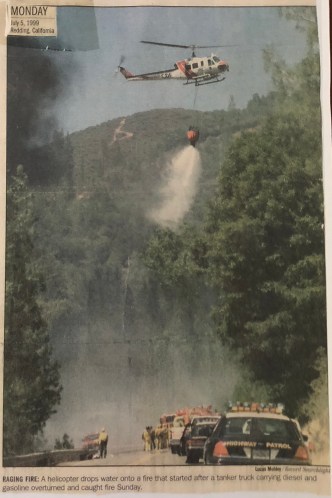
Photo credit: Lucas Mobley/Redding Record Searchlight.

I am posting this autobiographical essay in parts because the original essay was written as such. I wrote this in response to a course requirement in the Advanced Composition course at Simpson University.

Every detail, even the seemingly miniscule, is true to the best of my recollection. The exception is the name change of my fiancé­­­­––now and forevermore known as Frank.

The Woman in the Wallpaper ––Part One

The vexing sound of the 3:30 a.m. alarm trumpets through the dark morning air. I groan and pull the duck-down comforter around my chin. My fiancé, Frank, jumps up like a jack-in–the–box and heads into the kitchen. I rouse from a groggy fog and aim for the bathroom. My head throbs and I search through the muddled mist as to why when I remember the festivities of the evening involved beer­­––a lot of beer. I cherish the sweet, therapeutic bouquet of brewing coffee wafting into the room, ‘go-juice’ that promises to counteract the cobwebby fog.

I stand before the mirror in the dimly-lit room of the porcelain god and begin slathering flesh-colored goo over the source of my identity. I stare at the face in the mirror.  Everyone says I am gorgeous, but I don’t believe them.  I wonder what I would do if anything happened to my face.

“That’s a weird thought,” I mutter to the reflection as I click off the light and head to the promised land of java.

* *  *  *

The fuel-tanker’s roaring motor is silenced as Frank brings the truck to a stop at the Whiskeytown Visitor Center. He hops from cab to ground, not bothering to use the two stairsteps, and begins to check the tires––tires carrying nearly 8,000 gallons of gasoline and diesel.

We had met as employees of SST Oil, Inc., a wholesale gasoline and diesel company. We discovered we had attended the same high school, but he was two grades behind me. I knew of him, we knew many of the same people, but we ran in different crowds. I was a band-geek and an aspiring journalist, and he was of the cowboy-party crowd.  I remembered seeing his picture in the year book because the class that put the book together thought it would be funny to list his name as a brand of beer, a name similar to his.

At SST Oil, Inc., I work as a bookkeeper, billing fuel stations for gallons of diesel, gasoline, and kerosene delivered by our drivers.  Frank is one of our drivers.

I hear the thwack of the tire thumper pounding the tires. Frank whacks each tire––all eighteen of them, a legally required and routine safety check.  I have a sudden, all-consuming urge to get out––and stay out. But this urge remains mute and mum.

Frank directs the rig back onto the pavement, West onto Highway 299, a highway buzzing with holiday traffic as we head to the Weaverville BP fuel station.  Frank’s conversation takes a weird turn: he talks of recent nightmares of crashing the tanker.

“Well, I hope it’s not today.”

                                                                         *  * *  *

I fight through a fog of another kind as I am rousing from a medically-induced coma. I am told I have been under for two months.  I fade in and out. Morphine-laden dreams.

Awareness slowly ebbs in to stay. Was it real? Was I the headline: WOMAN HAS EMERGENCY TRACHEOTOMY IN TACO BELL?  Pain and tears are the bane of my existence, an existence nearly extinguished.

Nurses bossing, machines beeping, and laughter from the night-shift  are the sounds that fill my day.  The face on the wall glares at me––we face off––one without blemish, mocking.  A red luminescent hand swings around 360 degrees, 1, 440 times a day. I wonder if this ‘hand’ gets as tired as I do from the constant vigil.

I can’t speak or move.  I lay in bed with the video playing––what happened; when it happened; and why it happened.

A year later the official report reads that a tire blew out. The blown tire caused the truck and trailer to veer into the ditch. Frank fought to guide it back onto the road, but the weight of the fuel shifted, throwing the truck and trailer into chaos. In the process, the trailer split in two, sparking against pavement. We flipped and rolled across the road into a small ravine. Flames engulfed and surrounded us before the truck stopped twisting, turning.

I lay with pain, tears and memories: hearing Frank say that we’ve got to get out; Frank breaking the windshield with the tire thumper; how he scampered up over the dashboard and out the tiny opening of shattered windshield. A far greater pain pierces and splinters like the windshield at the memory that he bolted and left me to fend for myself.

I replay scene after scene: I think of how I stayed in the midst of bone-penetrating heat, staring at the golden-red flames around me­­––a moment so surreal––I am starring in a Hollywood film. I replay the panic of knowing I would be burned trying to get to the road; I remember thinking of my grandchildren; thinking that if I was going to die, I would die trying; I recall reciting the mantra– stop, drop and roll– and I remember the rocky ground as I begin crawling army-style up the steep- sided ravine.

The sound of a harsh, double tap at the doorway jolts me back into real time. It’s Nurse Kate. She scolds me for crying. Coming down from morphine accentuates emotions, and I am on the downswing. I say that if you were a burn victim, you’d be crying too.

“You are not a victim. You are a survivor,” she chides.

Quiet on the Blogging Front: The Happy Soul

IMG_0010_2
It’s tricky navigating through the junk.


I’m back after a hiatus full of funk, junk and many deliveries to the local transfer station, formerly referred to as THE DUMP in childhood days.


We mark our days by events. Having surpassed the 19th anniversary of the worst day of my life, I’ve been in a funk, a funk dark and deep enough that writing didn’t seem to bring joy.

In an attempt to prod my way out, I’ve been clawing and pawing through useless junk in my home.

Sorting through things I once valued, I find the hardest part is making decisions: stay or go? Sometimes it’s really tough.

Asking myself two questions helps speed the process and eliminates much hedging: “Has this thing served me?” and if the answer is in the affirmative I ask: “Will this continue to be beneficial to me on a regular basis?”

Murphy’s Law says that the thing I stored for 15 years and never used, will be the exact item I need in two weeks’ time. Such is life.

The new rule is that if I bring something new into my home, something old has to go.

Paralleling this physical activity, I’ve encountered meaningless emotions, thoughts, attitudes, perspectives and memories tied to these things. I am actively exposing the crap to daylight, dusting them off and asking the same two questions above. These things haven’t always served me well. Thus, the rule applies: bringing a new (positive and edifying) thought, emotion, etc., into my soul requires the old must go.

This requires active, purposeful and constant care. I suspect it’s going to take a lifetime. A healthy soul is a happy soul.

Excerpt #2 (1000 Deaths)

Burn injuries are not like a broken bone that once healed, can be concealed by flesh. There is no place to hide, no protective shell to retreat beneath. Four days from this writing, July 4th, will be my 19th burn-a-versary.  There are many deaths from burn injuries: 1000 surely seems exaggerated, unless you are the burn survivor. Below is another excerpt from my story:

sky lights space dark
Photo by Pixabay on Pexels.com

A machine emits a tone, flat and hopeless.  The never-ending pain engulfs me as an ocean-wave swallows a tug boat. I flutter like a blue-bird and I gain a bird’s-eye view while I watch my body convulse beneath nurses and doctors, frantic, scurrying like a horde of bees, blue and white.

A tiny beam, the width of a pen-light, shafts through the ceiling and I move toward the light. Someone yells clear!  I back away, drifting through the stars until I shudder back to the room, shrouded in black, cold air, and am resting on the pillowy mattress of  the bed.  I think I hear the crowd release the breath they have held in, or is it my own?

The night sky surrounds me, and a glow brightens as stars begin to rise. Suddenly, one rises beneath me and lifts me high on its beam. I am fringed in majesty. The warmth of light surges, begins to melt and meld me as I fold inside out like an elephant-shaped origami. The elephant sinks into nothingness.

A star glides, slow and sure, behind me until it circles around my left and is facing me. Two beings, transfigured, and perched atop the star engage in sober conversation. I see the Maker of the moon and I hear the voice of Job.

“Quash the day I was born.  Delete it from the books. Rescind the day of my birth, bury it in deep darkness, shroud it with the fog, and swallow it by the night,” Job laments.

“Can you stop the thunder with a shout like I can? Or can you pull in the great sea beast, Leviathan, with a fly rod? Can you lead Behemoth, most powerful and magnificent of all beasts, by a tether like a lamb such as I?” the Moon Maker asks and adds, “Show me your stuff. Let’s see what you are made of.”

I awaken to a darkened room, empty. I hear the rhythmic whoosh of the ventilator at my side––my lifeline­. I close my swollen eyelids and return to the stars.

silhouette of trees and mountain under blue starry sky
Photo by Sindre Strøm on Pexels.com


A Polarity in Self-Awareness

Oh, the faces I make while moving through the events of an ordinary day. Something tells me I am not alone.

My trail-walking face: smile, wave, greet passers-by with a cheery “Good Morning.”

My traffic face: scowl, growl, and glare with shoulders scrunched up to my ears and hands raised, outspread to each side,  greet fellow drivers with a screech “What the hay are you thinking?”

Stop. The. Insanity.

red stop sign
Photo by Pixabay on Pexels.com 


The Abyss

Dear Jaydan,

Your mother prepared a wonderful tribute
to her beloved son:

I ‘ve enclosed a note to you––

You didn’t know how much
you would be missed.
You didn’t know of our unfailing love for you.
Your mother, your father,
Your brothers and your sisters,
Your Gram and many others, too.

This abyss.

Every day
We think of you––
Of what could have,
What should have,
What would have,
Been.

This abyss.

I flew in a jet plane to see you
The day you were born.
Your sweet, tiny face shadowed
With my father’s image.

You were three weeks old
When you took your first jet ride
1,000 miles to your Gram’s house.
You were the tiniest of visitors.

They called you Jay-Jay the Jet Plane.
I called you Cricket.

IMG_3633
The Cricket and the Frog (photo credit: Jessica Martinusen)

I could not see you, but I could hear your teeny voice.

It was in a stupid moment, a cursed choice.
that will not allow us your face to see.
Let us hear you.

Many thoughts are of you this day––
Of what could have,
What should have,
What would have,
Been.

Your 18thbirthday.

With much love,

Gram-Gram,
from the abyss.

Excerpts from 1000 Deaths

I am posting an excerpt from writings I began several months ago. It is a true story, written in the present tense, of life after burns, yet the story in its entirety does tells of the accident,  subsequent hospitalization and such. The title 1000 Deaths is a temporary, working title at this point.


fullsizeoutput_516
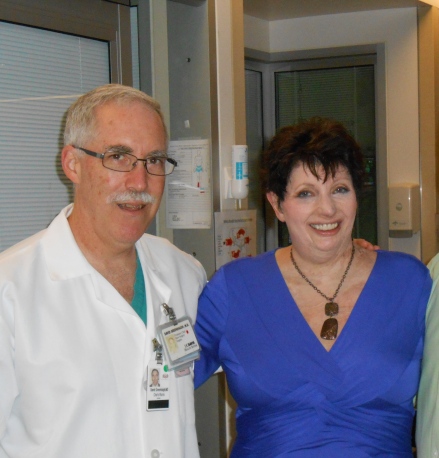
Dr. Greenhalgh, my burn doctor next to me in August 2012 at UCDavis Medical Center, Sacramento, California.

            1000 Deaths

I stand proudly before the oven in our newly constructed house. We’ve moved into it three days ago and this is our first home-cooked meal––roast beef with roasted carrots and red potatoes. I secretly gloat at the memory that as a licensed Real Estate agent, I earned a commission for buying my own home.

I open the door for a peek at the goods and I wheeze from the heat-blast, and I’m shaken and tossed. Like a soldier with PTSD, I am standing in the blaze screaming for Frank.* He tells me my hair is smoldering, but it is my hand I notice, melted and deformed.

Someone yells, and I about-face to find off-duty firefighters suiting-up––but they stop, frozen. The fuel tanker explodes, and they shed their gear. They tell me to lie down on the sizzling asphalt.

Once there, they douse me with saline. I am howling, animal-like for more. They say they are out and I plead for water. But they say they can’t because water might cause the burns to become infected.  I yell that I don’t care.

I see the treetops burning as I lie on the asphalt, waiting for my seven-winged bird.   I’m reassured the Medi-Vac helicopter is on its way and I hope. Black smoke floats higher and higher above the flames.

I see Frank on the ground to my right. He has arms in the air and my stomach churns at the sight of the skin falling from his forearms. Rows of vehicles line the road, watching, waiting for the danger to clear, gawking at the unlucky ones. I turn my face to the left and a camera is inches away.  Behind the camera, a woman is crouching and flashes light the air. I yell for her to stop. How dare she?

And I begin to yowl.

The sound of Frank’s footsteps on the hardwood floor and his worried cry catapults me into my world of roast beef, carrots and potatoes.

“What happened?” he demands, “Are you alright?’

It’s nothing dear, wash up, and please, set the table. Dinner is almost ready.”  I turn to smile at him then turn away and wipe the tears away with a dish towel.

*This character’s name has been changed.


My Little Town––My Earworm

My father, 81, still lives on the property he acquired from his father in the mid 1950s. I visit him on a weekly basis, typically Sunday afternoons.

On my most recent Sunday visit, I decided to listen to some oldies, via Pandora, on the Simon & Garfunkel station.  My current town is about 20 miles from my childhood home, so I was enjoying quite a few oldies and the pleasant memories associated with each song.  As I turned into the long drive way, “My Little Town” (Simon & Garfunkel) began to play. That song has earwormed its way into my head for the past week.

A midweek visit was necessitated–– Dad needed my help with some banking back in my little town. Coincidentally, “My Little Town” repeated in splendid reverie, as I turned onto his little lane.  As I wailed the lyrics of the chorus, “nothing but the dead of night back in my little town,” my curiosity compelled me to Google the lyrics to the full song. (I’m a lyrics kind of girl.)

I was stupefied to learn that for the past 43 years, I’ve been belting out incorrect words. According to lyrics.com, the correct lyrics read “nothing but the dead and dying back in my little town.”

My bad.

Dead and dying seems to be more appropriate of late, as in the past two years my little town has lost my mother and three aunties, two of whom I was especially close to.

The lyrics of the song seems to imply nothing productive comes from their little town: whereas, my little town has lost four bastions of strength, grace, faith and character.

I prefer to keep my version. Maybe its born from habit of 43 years. Maybe it’s plain stubbornness.  So, I’ll keep on keening “nothing but the dead of night” safely within the confines of my little black car on my way to my little town.

It’s Saturday Morning–in Honolulu, USA

I didn’t make my Saturday morning blogging goal by Pacific Time, but hey, it’s Saturday morning in Honolulu. I’ll console myself with that.

I’m not really the sort to be happy coming in second place, but I am elated to learn I placed second in our university writing contest. Am I maturing? Maybe, maybe not. I was up against some pretty stiff competition, so I wasn’t sure I would even place.

The first-place winner is one I am positive will continue to be an award winning and prolific writer. I look forward to reading her books in that seemingly never-land of after graduation.

Write on bleeps, as Mike Senczyszak writes, write on