There once was a little girl who had the nursery-rhyme curl in the middle of her forehead. Country folk like to call it a cowlick, named after the way a swirling pattern is fashioned when a cow licks the hair of her calf. But on humans it refers to a strand of hair that stands up or lies at an angle at odds with the rest of the hair. Little Girl was made with two––one on her forehead and one on the crown of her head.

Little Girl lived with her parents at the end of a dirt road; a road that seemed endless to a small girl. Her father’s parents, Grandma and Grandpa Spoon, lived at the mid-way point so that she passed their house when walking up or down the lane. Walking ‘up the lane’ meant going to the paved road that led into town. Walking ‘down the lane’ meant going home.
Her adventures of riding the school bus began at an early age. The bus was a big caterpillar looking mustard-colored machine that gobbled up kids early in the morning and carried them away to places where they were taught all sorts of things. The best thing about this bus was it brought them back to the end of the lane and spit them out in the afternoons.
Little Girl knew how to read fluently at four years old, so she skipped kindergarten and started the first grade at four, turning five years old three weeks later. She was able to read so young because her grandma, the one who lived up the lane, taught her. In fact, her Grandma Spoon taught most all her grandchildren to read for she was a retired schoolteacher.
On non-school days Little Girl walked up the lane to visit her mother’s parents, who also lived in the neighborhood. She visited the Watkins’ home often because she liked her grandma and had hopes of being given buttered toast covered with sugar. It was a secret treat just for Little Girl whose mother never allowed such a thing. Two uncles and one auntie also lived with Grandma and Grandpa Watkins, but Grandpa was rarely home because he worked in the woods far away. The uncles played guitars and Little Girl danced with her auntie to the catchy tunes. Sometimes she didn’t dance at all and watched Auntie twist to the music on her Twister Board. The Twist was all the rage in that day.
A visit to the Watkins’ home meant walking up the lane just past the Spoon home. The two homes were separated by a wide pasture and was catty-corner to the Spoons. So, she had to go under a barbed-wire fence and walk the pasture because she wasn’t allowed to walk on the paved road. The problem was the field was home to many cows and bulls and Little Girl was afraid of cattle. She always looked two or three times to be sure they were far away before risking being poked by the barbed wire fence while entering the field.
She hurried along the way looking over her shoulder to be sure no beast had her in their sights until she was safely over the wood fence into the Watkins’ yard. She loved being able to visit both sets of grandparents all by herself, no adult to scold her for this or that or anything at all. Or any pesky siblings to bother her.
After every school day, school bus #81 dropped her and her older brother to walk down the long lane to home. Their baby sister stayed home because she was just that, a baby. And babies didn’t go to school or ride busses.
A row of mailboxes sat on the edge of the dirt road ending a few feet before the paved highway perpendicular to the dirt road. Little Girl always opened the door of the largest mailbox first and snatched the stamped envelopes addressed to Mr. and Mrs. G.F. Spoon. Her brother never interfered, and she never knew why he was not interested in this fun chore.
It was fun to Little Girl because Grandma rewarded her with a dill pickle. Little Girl was well known for her love of dill pickles, but her mother never bought them because her father, nor her brother liked them. Some days Grandma was out of dill and substituted sweet or bread and butter. Little Girl didn’t like these pickles as much, but she still ate them.
If the weather was good, Grandma would be sitting in her rocking chair on the porch. She would ask if Little Girl was a good mailman or a bad one. She never really knew what she was but always answered “good.”
Sometimes Grandpa joined them but most times he was in his workshop behind the house. The shop was built by the old man out of blackened railroad ties. Many stood slightly crooked and off kilter. Little Girl learned late in life that the reason the thick square boards were blackened was because her father, in his early 20s, had accidently set fire to them. Yet he never confessed to Grandpa Spoon.
Grandpa Spoon was a small man whose boot size was only 7.5, small for the average man and was 5 foot 9 inches or so tall, or so they said. His stooped shoulders and wrinkly lines on his bespectacled face made him look shorter. But Grandma was robust making her appear slightly taller than her husband. He wasn’t as friendly to Little Girl as Grandma, so she didn’t seek him out if he was absent.
Little Girl’s home was about 1/8 mile from the elder’s Spoon Ranch, as it was called. She loved talking with her grandma, because Grandma had been a substitute teacher in nearly every school in Shasta County, California, and beyond. She had lots of stories to tell––stories about the old days.
One day she learned how Grandma earned her teaching credentials: She and her five children at the time stayed camped out in a tent in Mt. Shasta, California. She attended classes while the oldest children watched the younger in the campground. Sometimes Grandma took a child to school with her. She did this for about 6 weeks! Little Girl was impressed at the fortitude and courage Grandma demonstrated. Even at five years old she recognized her grandma as a free thinker, a woman ahead of her time. In that era, most married women did not work on a job: they stayed home caring for the children, cooking, and cleaning while the husband was employed.
Little Girl’s favorite story was when Grandma went to work teaching at a school in the Jelly’s Ferry Road area in northern California. Her youngest baby at the time, Daisy Bell, just a few months old was put on the teacher’s desk to nap. Before Grandma knew it the baby rolled aside right off that desk! She had been wrapped up so tight that the unravelling of the blanket stopped the babe from hitting the floor with full force.
There was a day, May 25, 1966, when Little Girl got off the bus to find flashing lights of an ambulance parked in the road in front of the Spoon Ranch house. She forgot about the mail, she forgot about being a good or bad mailman, and even forgot about the dill pickle. She ran to the house, but her father met her and her brother on the road in front of the house and were told not to stop but to go home to Mama. He only said Grandpa was sick and needed to go to the hospital. No one told her grandpa was already gone before the ambulance got there. He had keeled over with a stroke. Just like that––at the snap of a finger––talking one second and gone the next.
Little Girl was distressed that grandma was all alone and asked to spend the night to care for her. She was allowed and slept on Grandma’s couch for the next several nights. Each morning, she made hotcakes for Grandma who insisted they were not called pancakes, but hotcakes!
The old women still drank water from a dipper filled from the kitchen faucet instead of from a glass. She never explained why she did this, but Little Girl perceived it went back to the days of drawing a bucket of water from a well, long before indoor plumbing and kitchen faucets were installed in homes.
One time when Little Girl was washing a drinking glass she had used, Grandma Spoon told her with an air of superiority, “people always wash the bottom of the glass when they should be washing the rim because that’s where the germs are!” To this very day Little Girl can’t wash a glass without hearing that voice in her head to wash the rim, where the germs are.
As Little Girl was still learning to make a hotcake taste good, her grandmother sat at the table patiently waiting. One morning she instructed Little Girl to do all things in the name of Jesus. If you can’t do it in His name, you shouldn’t be doing it. (Little Girl wondered if that would help make the perfect hotcake.) She never forgot this advice but didn’t always adhere to the guidance.
After several nights keeping guard of her beloved grandma, she awoke one morning to find an extra blanket upon her. Little Girl didn’t remember crying in the night, but Grandma got up to cover her. Little Girl felt she had failed. She was supposed to take care of grandma, not be cared for. But Little Girl was only 9 years old and didn’t realize a lot of things. That was Little Girl’s last night at the Spoon house. The adults decided one of Grandma Spoon’s daughters should take the job until a professional nurse could be hired.
Three and one-half years later, just after midnight of the first full day of Little Girl being 12 years old, her grandmother, her teacher, and spiritual advisor, passed on to her heavenly home.
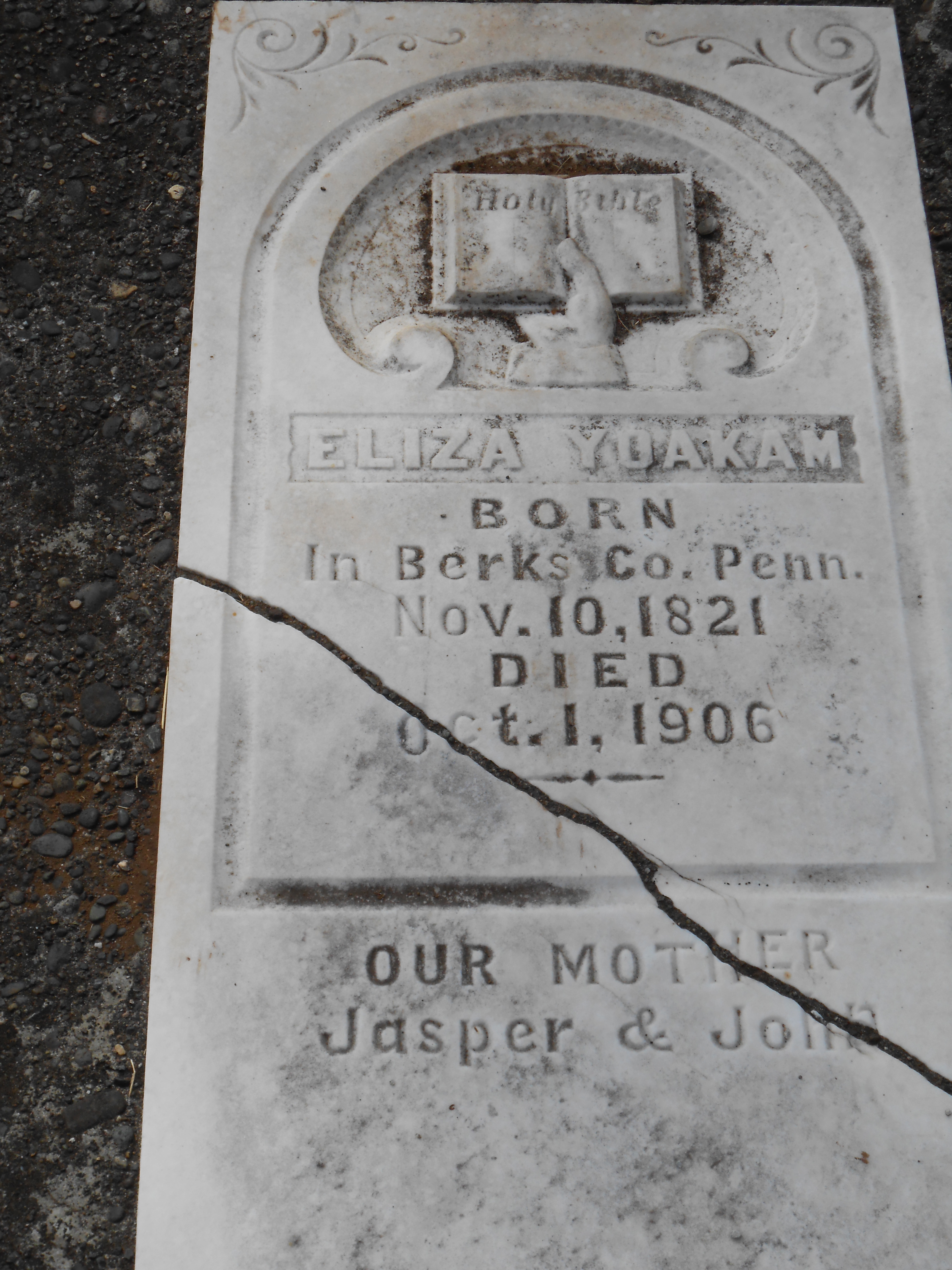
Little Girl learned long after Grandma Spoon’s passing, when Little Girl’s little girl had a little girl, that Grandma had been a postmaster in a tiny town named after her: the town of Stacy, California, in honor of Mary Stacy Joella Yoakam Spoon, Postmaster.
The End
 theRagingSpoon